
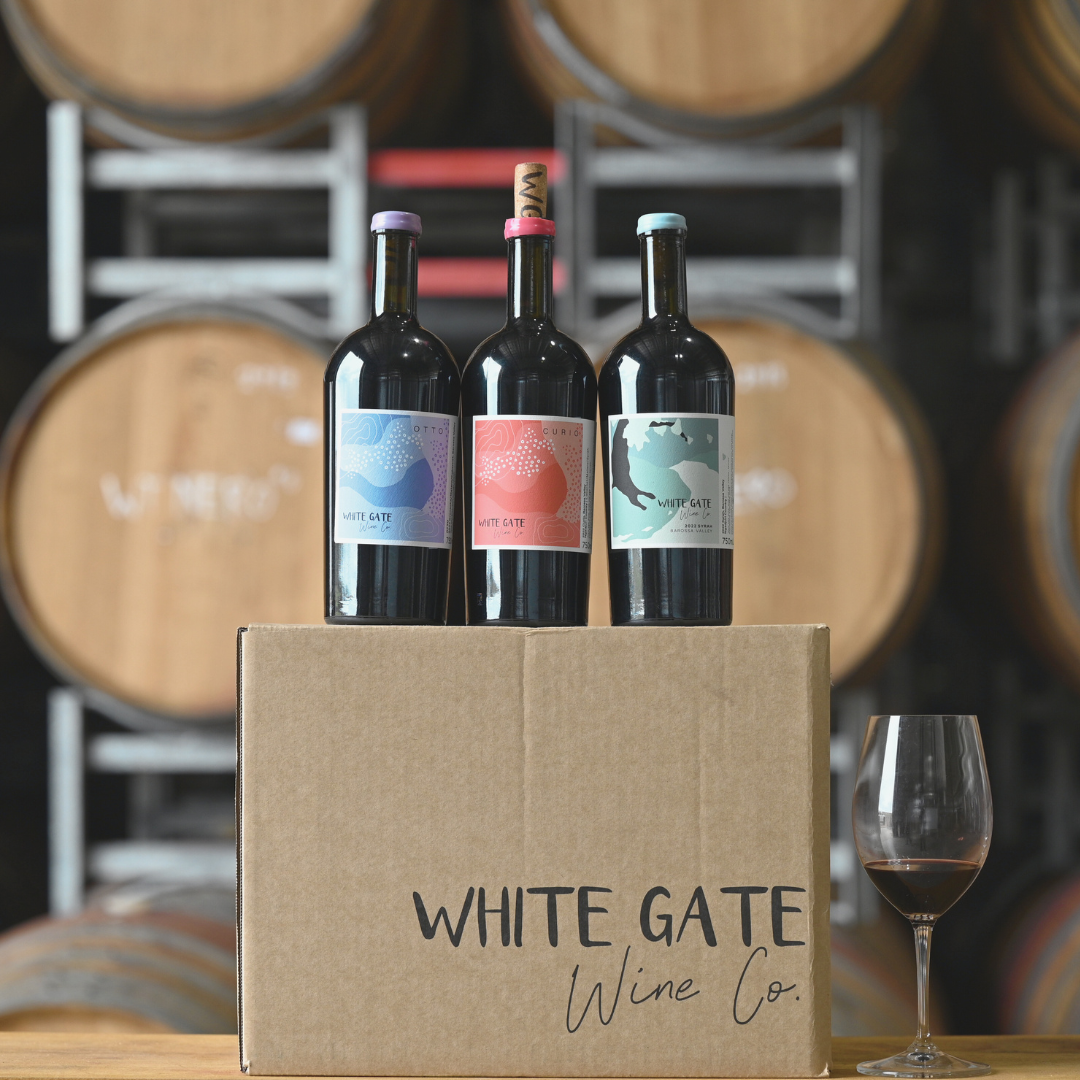
White Gate Wine Co. is a small, independent wine project in the Barossa Valley of South Australia founded by Chad Connolly, emerging around 2019 as a personal expression of Barossa fruit and intentional winemaking. Chad began experimenting with winemaking while studying at Charles Sturt University and by 2018 was sourcing fruit from friends and local growers to craft small lots of wines that reflected his stylistic goals rather than regional stereotypes.
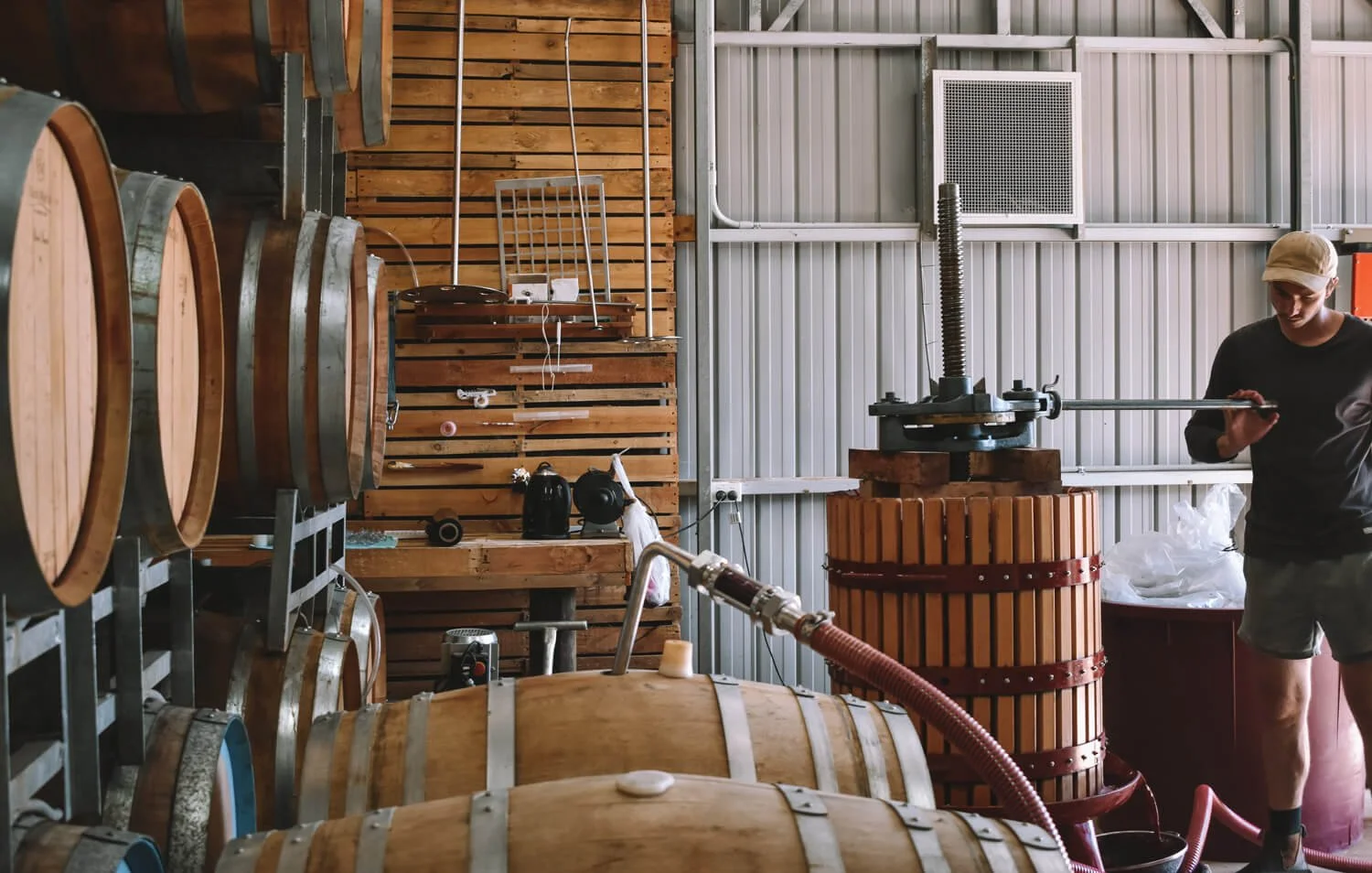
Connolly’s vision was shaped by an interest in the precision and restraint of Burgundy and Beaujolais styles, which stood in contrast to the traditional image of bold, high-alcohol Barossa wines. He deliberately adopted earlier picking to preserve natural acidity and vitality in the fruit, and began exploring techniques such as whole-bunch inclusion for reds, intracellular fermentations, and basket pressing to achieve bright, energetic wines. The aim has been to present a lighter, more elegant side of the Barossa through wines that are balanced, expressive, and textural.
White Gate does not own extensive vineyards of its own but works closely with small growers in the region and leases vineyards, focusing on older plantings and organic farming. Blocks of old vine Grenache and Semillon, some approaching 90 years of age, have featured prominently in the lineup, alongside Shiraz, Cabernet Sauvignon, Nero d’Avola, and other Italian varietals. Connolly also sources fruit from sites north of Lyndoch and west of Nuriootpa, incorporating organic and biodynamic practices in the vineyards he manages or collaborates with.
In the winery, Chad personally oversees all stages from harvest through bottling, with a hands-on approach that includes small batch ferments, natural yeasts, minimal sulfur addition, and careful vessel selection including terracotta amphorae for certain whites. The wines are basket pressed, left on lees through maturation, and bottled with minimal intervention, reflecting his ethos of letting fruit and site speak directly. White Gate’s portfolio continues to evolve with expressive varietal wines and blends, and the project has quickly gained attention for its vibrant, terroir-driven expression of Barossa fruit.